



















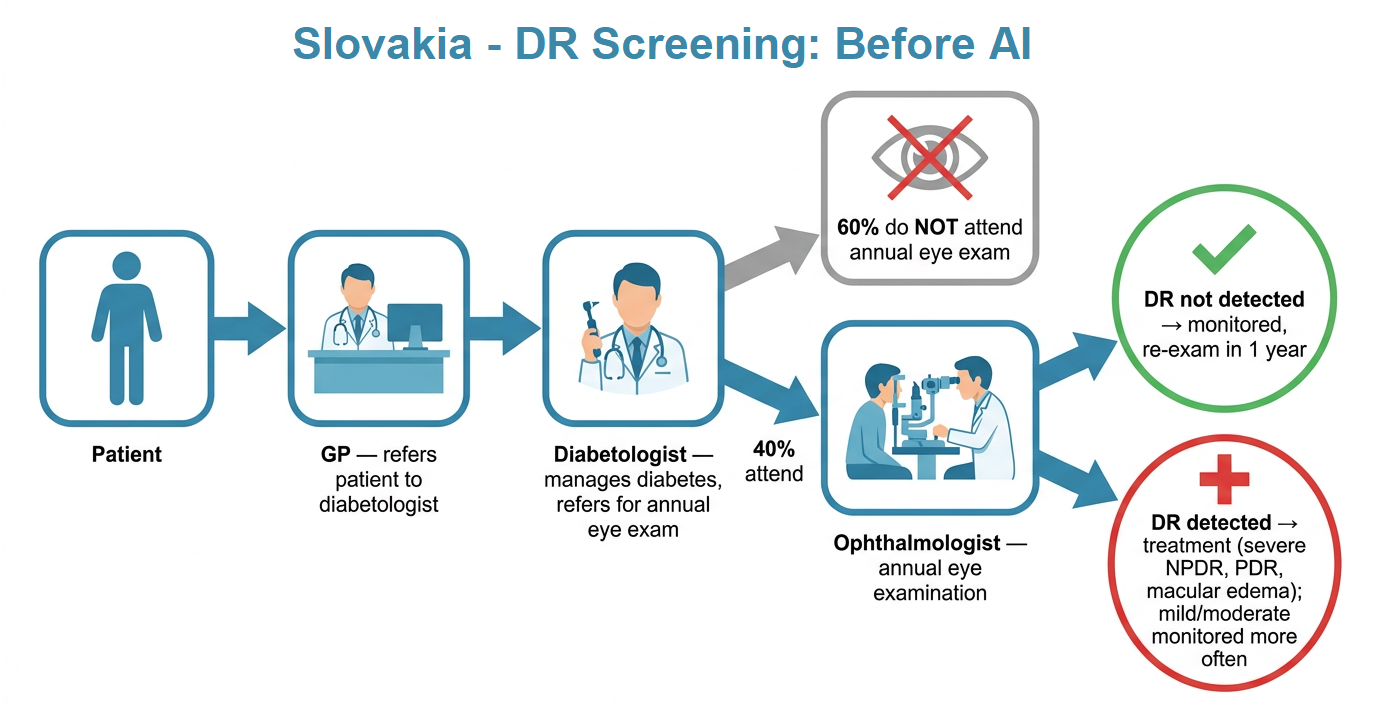
In the traditional Slovak care pathway, a patient diagnosed with diabetes is referred by their general practitioner to a diabetologist, who manages their condition and refers them once a year to an ophthalmologist for an eye examination. In practice, however, around 60% of diabetic patients never attend this annual check-up. For the 40% who do, the ophthalmologist examines the eyes for diabetic retinopathy (DR) — a complication of diabetes that damages the retina and can lead to blindness. If no DR is found, the patient returns in a year; if DR is detected, treatment begins for severe cases (severe non-proliferative DR, proliferative DR, or diabetic macular edema), while milder cases are monitored more frequently. The model's main weakness: it depends entirely on the patient's own initiative, so most patients are never screened.
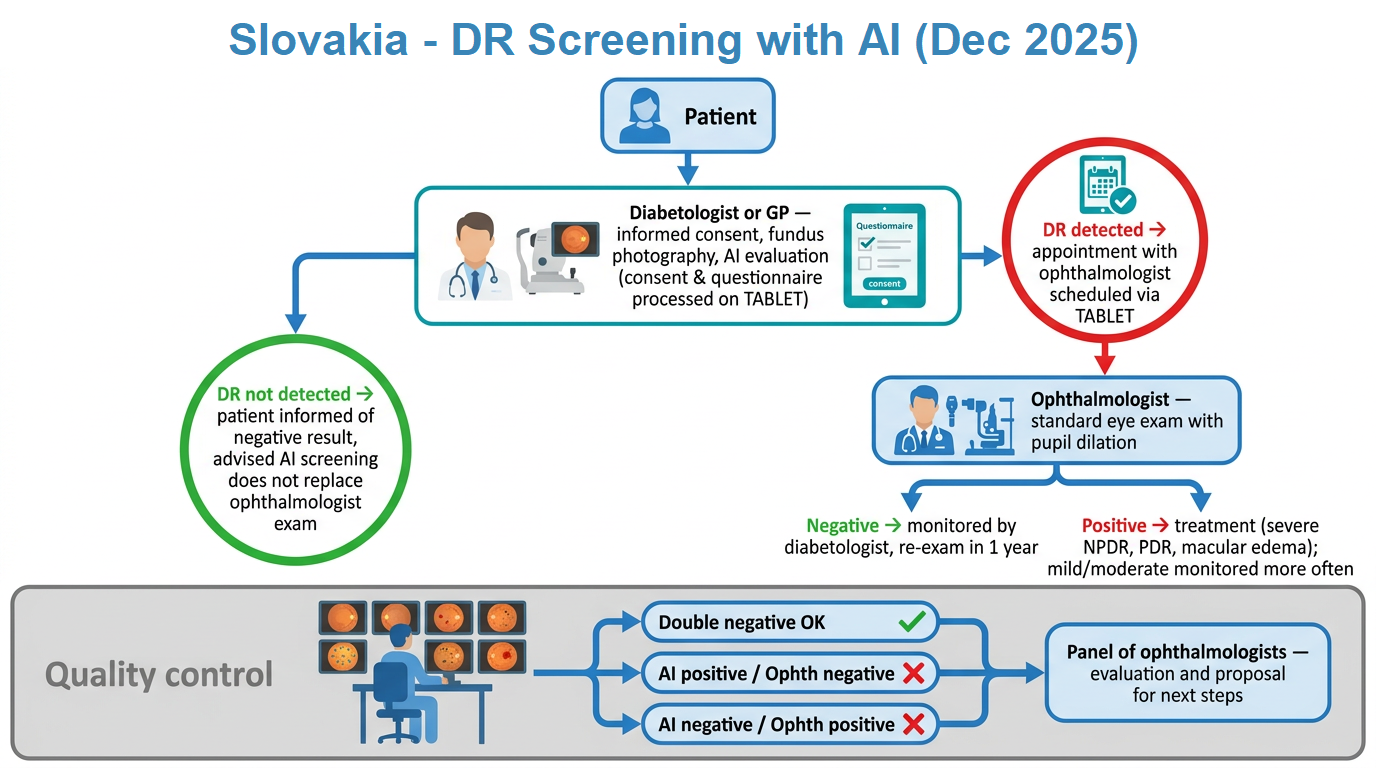
By the end of 2025 the Slovak pilot pathway was further digitalized. The screening steps remain the same — tablet-based consent and questionnaire, fundus photography, and instant AI evaluation at the diabetologist or GP — but referral is now fully electronic: when DR is detected, the appointment with the ophthalmologist is booked directly through the tablet application instead of by phone. This removes a manual step, speeds up referral, and ensures no positive screening result is lost between primary care and the eye specialist. The double-reading quality-control process with the ophthalmology panel continues unchanged.
Please Note: AI doesn't replace doctors — it empowers them. Behind every AI result is a doctor who makes the final call.