





















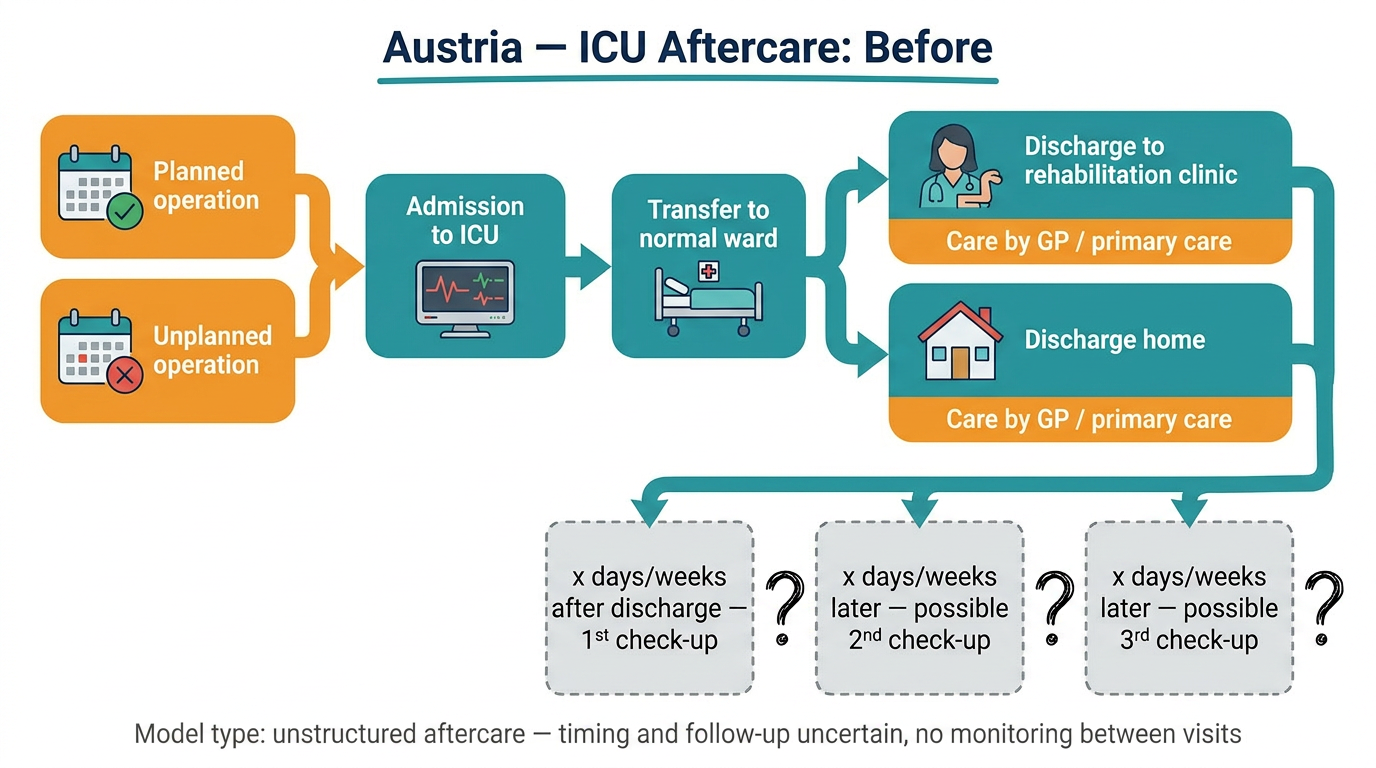
After a planned or unplanned operation, patients requiring intensive care are admitted to the ICU and later transferred to a normal ward. From there, they are discharged either to a rehabilitation clinic or directly home, where care is handed over to GPs and primary care providers. What happens next is largely undefined: a first check-up takes place "some days or weeks" after discharge, a second or third may — or may not — follow. There is no fixed schedule, no monitoring between appointments, and no systematic way of detecting Post-Intensive Care Syndrome (PICS), the cluster of physical, cognitive and mental problems that often follows an ICU stay. Recovery is left to chance and to the patient's own initiative.
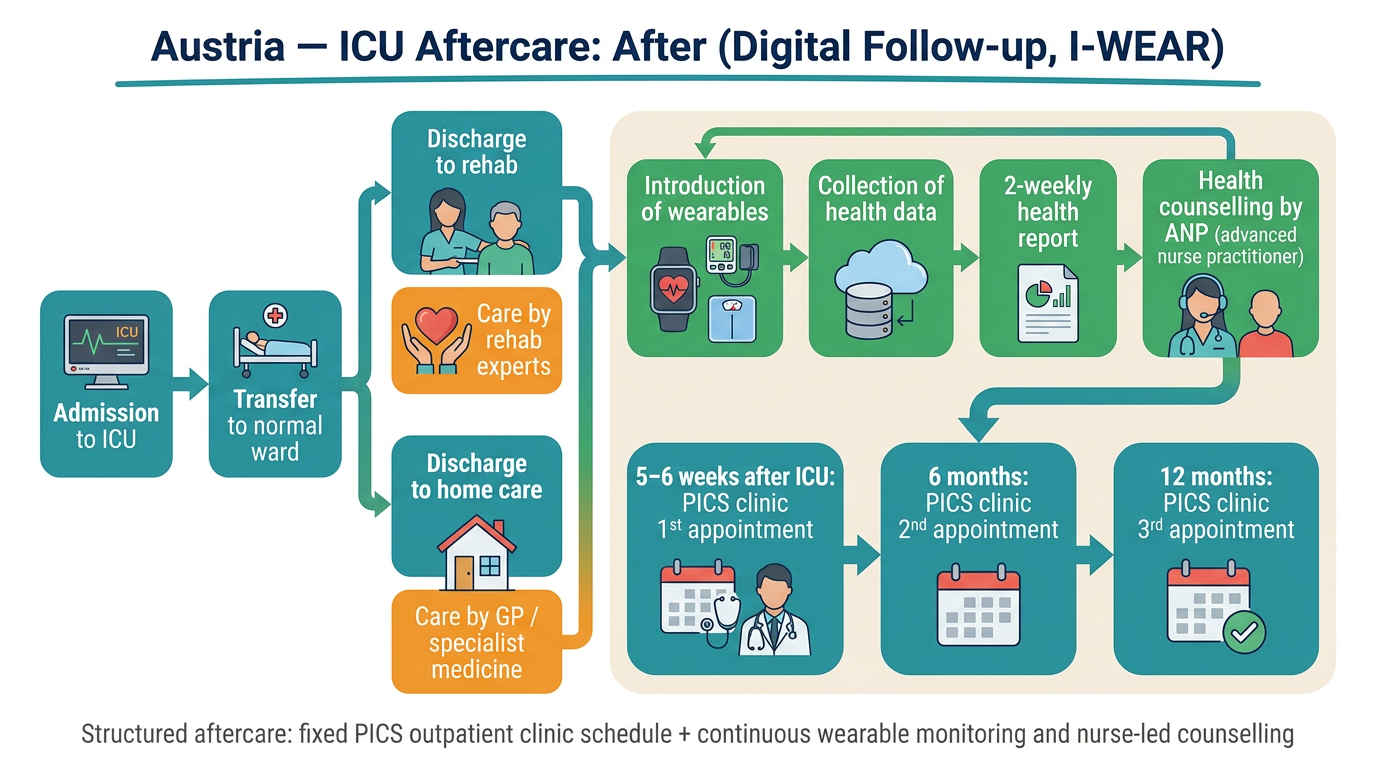
In the new model, every ICU survivor follows a structured aftercare schedule at the PICS outpatient clinic: a first appointment 5–6 weeks after the ICU stay, a second at 6 months and a third at 12 months. In between, patients in the I-WEAR study receive health technologies for six months — a health watch, a blood pressure monitor, a smart scale and a smartphone app — which continuously collect health data such as physical activity and sleep. The data feed into a health report every two weeks, and an Advanced Nurse Practitioner provides regular digital health counselling based on the results. Patients gain insight into their own recovery, and the care team finally has visibility between visits.